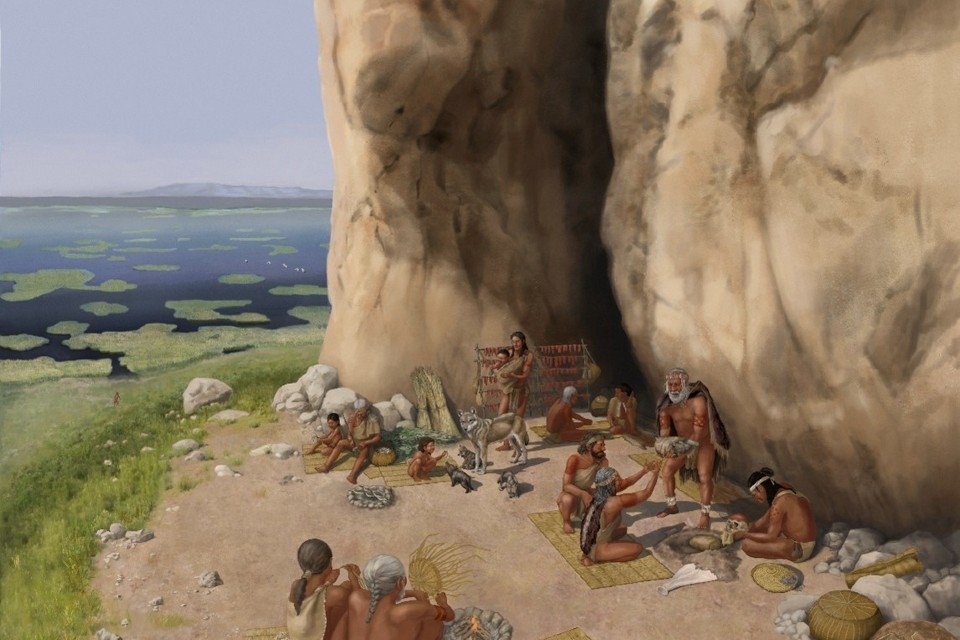
Evidence of some of the earliest dogs has been identified at two University of Liverpool/British Institute at Ankara archaeological excavation projects in central Anatolia, Türkiye.
Shedding new light on the development and spread of early domestic dogs, the findings are documented in two research papers published today (26 March 2026) in Nature.
Providing fascinating insights into dogs’ relationships with people and their rapid spread across Europe and Anatolia – the work involved zooarchaeologists from University College London, University of Liverpool and based in Türkiye and ancient DNA and isotope teams from the Natural History Museum, the Universities of Oxford and York, the Francis Crick Institute, and LMU Munich.
Two of the key excavation sites used are led by the University of Liverpool’s Professor Douglas Baird – Pınarbaşı excavated with Karaman museum and Boncuklu excavated with co-directors Professor Fairbairn, University of Queensland and Associate Professor Mustafaoĝlu, Ankara Hacı Bayram Veli University. Together, the sites span the transition from the Epipalaeolithic (latest Palaeolithic) to early Neolithic dated 16000 to 10000 years ago.
At the Epipalaeolithic rockshelter at Pınarbaşı, a mobile group camped regularly and buried their dead. They also buried dog puppies identified directly by this ancient DNA work, which are now the earliest dogs directly identified by their nuclear DNA (as opposed to other more indirect indicators).
The University of Liverpool’s Professor Doug Baird said: “The archaeology makes clear that these dogs were close companions of humans, isotope analysis showing the dogs ate fish, a major element of the human diet and like humans were carefully buried in the rockshelter near human burial, thereby receiving ritualised treatment analogous to the humans.
“These people hunted animals like wild sheep and dangerous wild cattle so it seems likely that these animals were hunting, but also possibly guard dogs, given the presence of large predators like wolves and leopards in centra Anatolia at that time”.
Ancient DNA analysis from teams at National History Museum, Oxford University and LMU Munich reveals the oldest genetic evidence of dogs dated to 15,800 years ago at Pınarbaşı, with multiple dogs dated just slightly later identified across Europe, indicating dogs were widely distributed by 14,000 years ago.
Excitingly, these researchers studied ancient DNA from late Upper Palaeolithic canids in Gough’s Cave in the UK, at the far edge of Europe, as well as at Pınarbaşı and identified a high degree of genetic similarity between Gough’s Cave and Pınarbaşı dogs. This suggests this lineage of dogs dispersed quickly from one end of Europe to the other in a matter of a few centuries at most. At Gough’s Cave too, close relationships are suggested by treatments of dogs at death similar to the humans.
Intriguingly, these dogs spread across culturally and genetically different groups over those long distances, Professor Baird suggests this was “probably because of their value to human groups but therefore certainly as parts of intergroup exchanges, along also likely with their own agency”.
The study also shows that these dogs were ancestral to modern European breeds.
Dr William Marsh, Postdoctoral Researcher at the Natural History Museum and co-first author of the study, said: “The genetic identification of two Palaeolithic dogs from Gough’s Cave and Pınarbaşı represents a step-change in our understanding of the earliest dogs. These specimens allowed us to identify additional ancient dogs from sites in Germany, Italy and Switzerland, which clearly show that dogs were already widely dispersed across Europe and Türkiye by at-least 14,000 years ago.”
The second paper, led by ancient DNA lab at the Francis Crick Institute identified domestic dogs at Boncuklu, 30 kms from Pınarbaşı, dated to c 9000 BC at the beginning of the Holocene, the warm period following the end of the Ice Age.
In the largest study of canid remains to date, new genetic techniques allowed two thirds of analysed remains to be classified as dogs or wolves.
The inhabitants of Boncuklu were descendants of those using Pınarbaşı, but at that period adopted permanent occupation of a settlement in the wetlands and in due course adopted domesticated plants and started to closely manage the wild sheep in the hills near the site. Dogs at Boncuklu are also buried, but in this case actually in burials directly with humans. In this context they may well have played a role as hunting and guard dogs but also may have been involved in early sheep herding.
The first farmers to appear in Europe spread from western Anatolia 2500 years later than the initial occupation of Boncuklu, and were genetically related to the Boncuklu population. They took with them Anatolian dogs, who also spread westwards with farmers. This study shows that these Anatolian-derived Neolithic dogs interbred with the dogs of local/indigenous Mesolithic populations to a greater degree than the incoming Anatolian derived farming populations, again showing that dogs were valued to a degree that overcame cultural boundaries and indicating the significant extent to which they operated with their own agency.