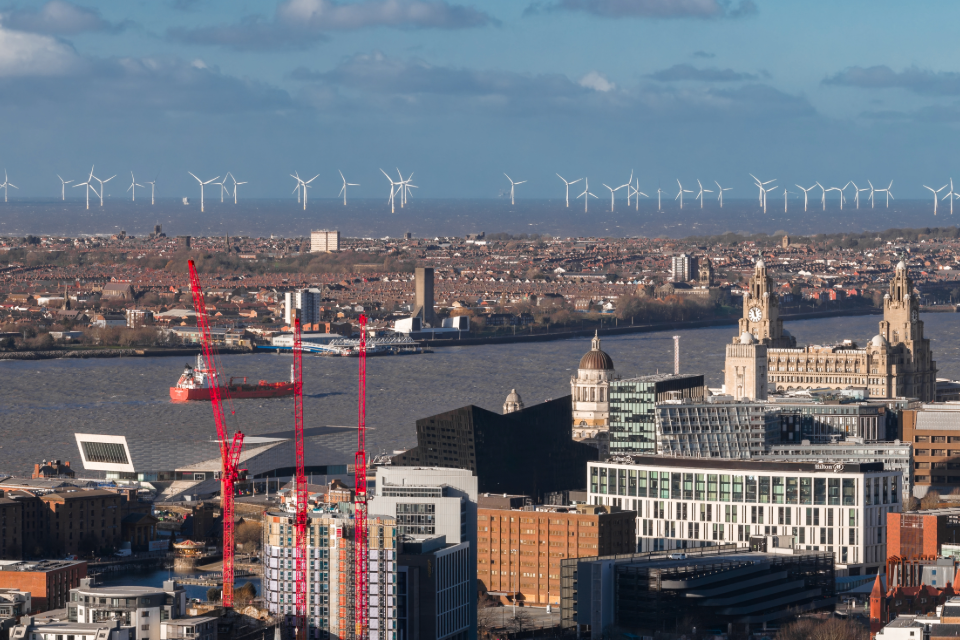
The University of Liverpool played a key role in supporting the Navigating Maritime Innovation (NMI) project, hosting Mersey Maritime’s second Innovation Summit to showcase its findings and highlight regional opportunities in the maritime sector.
The event brought together leaders from industry, academia, and regional organisations, and also marked the launch of the new which outlines growth and investment opportunities across the Liverpool City Region (LCR).
Delivered over 15 months and led by Mersey Maritime, the NMI project aims to attract investment, foster collaboration, and support growth across the region’s £9 billion maritime economy.
The Summit presented the innovation pipeline, demonstrated sector capability, and spotlighted projects and businesses ready for investment.
Key findings from the NMI project:
The region has a £1.9 billion maritime innovation pipeline, with the majority of projects already underway or starting within the next 12 months, spanning advanced technologies like AI, digitalisation, and automation, and connecting industry, universities, and ports to drive jobs, skills, and regional growth. [Read the full report here].
The report highlights that, collectively, the University of Liverpool delivers an integrated model of skills development, fundamental research, and applied innovation, spanning energy, digital systems, and environmental resilience. Its ability to align doctoral training with industry need, supported by national-scale infrastructure and partnerships, positions it as a key enabler of the LCR’s transition from maritime innovation to large-scale, investable deployment in a net zero future.
University of Liverpool Vice-Chancellor Professor Tim Jones opened the Summit, emphasising the University’s role in driving regional impact: “As a global university delivering world-leading research, we are equally committed to our civic role in the city and wider region. The NMI project confirms what many have observed—the maritime sector is going from strength to strength. This is excellent news for the University, local prosperity, jobs, and the LCR economy.”
Alongside Liverpool John Moores University, the University of Liverpool forms one of the UK’s most strategically important maritime innovation clusters. Acting as anchor institutions, they connect research, industry, and policy to deliver practical impact and regional growth.
The University’s maritime innovation work aligns with the UK Government’s Industrial Strategy, addressing decarbonisation, digitalisation, and sustainable operations. Its interdisciplinary research spans clean maritime, digital maritime, ports and logistics and operations, air quality, health and coastal communities, and maritime security. World-class facilities—including the Materials Innovation Factory, Digital Innovation Facility, Virtual Engineering Centre, and National Biofilms Innovation Centre—support collaboration and accelerate real-world impact.
Investment in future talent is also central to the University’s strategy, with specialist Centres for Doctorial Training (CDTs) in Net Zero Maritime Energy Solutions and Distributed Algorithms equipping the next generation with skills in AI, automation, and clean energy.
Innovate and connect
Discover the University of Liverpool’s maritime innovation work, explore collaboration opportunities, and join the growing community of staff driving research, projects, and impact across the sector.