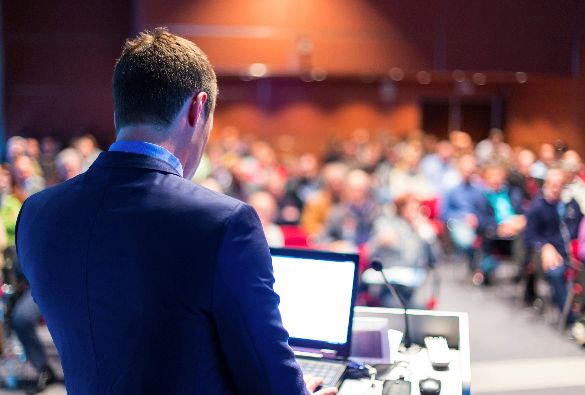
The University of Liverpool has welcomed researchers, academics, industry partners and higher education professionals from across the UK and around the world this summer, hosting a packed programme of major conferences and events across the University and the city.
From international gatherings in engineering, microscopy and cancer research to events showcasing Liverpool’s world-class research facilities and supporting the next generation of researchers, the programme has underlined the University’s role as a place for global collaboration, knowledge exchange and discovery.
Opening our research facilities to new collaborations
The summer programme began with the Liverpool Shared Research Facilities (LIV-SRF) Showcase 2026 in June, which welcomed more than 200 researchers, industry partners and collaborators.
Held as part of the Liverpool City Region Innovation Investment Fortnight, the event gave visitors an opportunity to explore the University’s world-class research facilities and discover opportunities to collaborate with Liverpool researchers.
Vice-Chancellor Professor Tim Jones opened the event, highlighting the importance of collaboration between academia and industry in driving innovation and tackling real-world challenges.
Engineering education takes centre stage
The School of Engineering hosted the 22nd International CDIO Conference, bringing the international engineering education community to Liverpool.
Centred on the theme Enhancing Student Professional Development: Innovation in Assessment and Feedback, the conference explored new approaches to developing and assessing the professional competencies, skills and attitudes needed by the engineers of the future.
Global experts explore ethical approaches to biomedical research
More than 100 researchers from around the world came together at the University for the 3rd International CAM Conference and explored the growing use of chorioallantoic membrane (CAM) models as adaptable and ethical alternatives for a wide range of biomedical research.
Researchers discussed applications spanning cancer and other diseases, regenerative biology, molecular mechanisms, therapeutic compounds and biomaterials.
Shaping the future of postgraduate research culture
The University also hosted the UK Council for Graduate Education Annual Conference. This flagship annual event brought colleagues together around the theme Postgraduate Cultures: Community, Collaboration and Connection, exploring how universities can create thriving, inclusive and sustainable environments for postgraduate researchers and students.
Professor Gavin Brown, Pro-Vice-Chancellor for Education at the University of Liverpool, welcomed delegates to the conference, which featured presentations and workshops addressing some of the most pressing issues facing postgraduate education.
Supporting the next generation of materials researchers
In August, the University hosted the inaugural UKPorMat Early Career Researchers Conference, organised by the Porous Materials Interest Group of the Royal Society of Chemistry.
The two-day meeting was the first UKPorMat event designed specifically for early career researchers, creating opportunities for PhD students, postdoctoral researchers and newly independent academics to present their work, develop new connections and build collaborations.
Researchers shared advances across porous materials including metal-organic frameworks, covalent organic frameworks, zeolites, porous polymers and organic cages – areas with applications across energy, sustainability, catalysis and other emerging technologies.
Microscopy’s global community comes to Liverpool
Liverpool welcomed the 21st International Microscopy Congress (IMC21) from 31 August to 4 September, which is one of the world’s major gatherings for the microscopy community.
Delivered by the Royal Microscopical Society alongside the International Federation of Societies for Microscopy and the University of Liverpool, the Congress brings together scientists from around the world for a major programme of research presentations, workshops, exhibitions and networking.
This year’s theme, The Next Generation – Embracing the Responsible AI Revolution, puts the spotlight on the future of microscopy and the rapidly evolving role of artificial intelligence within the field.
International environmental assessment community gathers in Liverpool
The University also welcomed more than 200 delegates from 28 countries for a major international conference on environmental impact assessment – the largest event of its kind to have been held in England.
Organised by the University’s Environmental Assessment and Management Centre in the School of Environmental Sciences, in collaboration with North-West University, South Africa, the conference brought together an unusually broad mix of expertise from academia and professional practice. Delegates represented 48 higher education institutions, 30 consultancies, 11 government organisations, seven NGOs and charities, and four international and UN organisations, with around half travelling to Liverpool from overseas.
Held as an International Association for Impact Assessment (IAIA) Ireland-UK Branch and IAIA Academia Section event, the conference created an important forum for researchers and practitioners to exchange knowledge and strengthen international collaboration around environmental and strategic impact assessment. Its programme brought together many of the field’s leading experts, further reinforcing Liverpool’s role as a convenor of international expertise addressing complex environmental and sustainability challenges.
Exploring smart, inclusive cities through international exchange
The Department of Geography and Planning hosted the first international comparative workshop on Smart Inclusive Transition (SIT), bringing together partners from the UK, South Korea and beyond to explore how cities can use innovation to deliver more inclusive and equitable outcomes.
Developed through UN-Habitat’s People-Centered Smart Cities agenda, the SIT framework examines how technological, social and institutional innovation can improve access to services, public decision-making and opportunities across different communities. Following its first comprehensive city-level application in Suwon, South Korea, the Liverpool workshop marked the next phase of work to test how the approach can be applied across different urban contexts.
Together, these events have brought thousands of conversations, new connections and opportunities for collaboration to Liverpool over the summer – showcasing the breadth of research and education taking place across the University while strengthening relationships with research communities around the world.
From supporting emerging researchers to sharing new approaches to some of society’s biggest challenges, the University’s summer conference programme demonstrates the important role Liverpool plays in bringing people together to exchange ideas, build partnerships and advance knowledge.