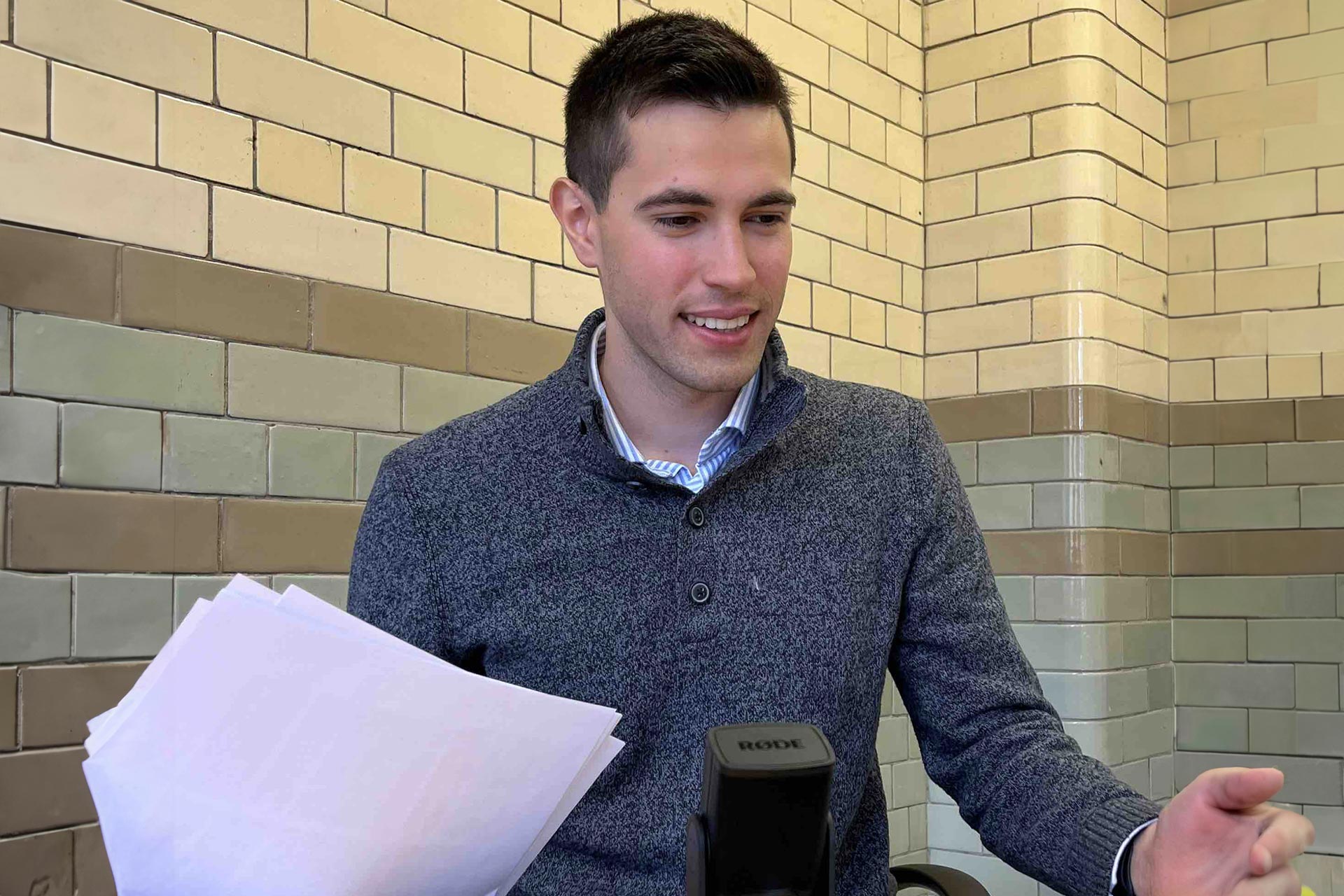
Filippo Dall’Armellina is a PhD graduate in Biochemistry whose work spans molecular and cellular biology, computational modelling, and science communication. He completed his undergraduate studies in Biological and Medical Sciences, graduating with First Class Honours in 2022, where he was also selected as the graduation ceremony student speaker. He was recently featured in Science for his work in science communication and is co-host of the neuroscience podcast Neuro Podcases, where he helps translate cutting-edge clinical research for a global audience.
My research and journey to a PhD
I arrived at the University of Liverpool as an undergraduate fascinated by how molecular biology translates into real-world medicine. During my degree in Biological and Medical Sciences, I became interested in the molecular mechanisms underlying disease, particularly how proteins interact within cells and coordinate complex cellular processes. That curiosity steadily evolved into a clear ambition to pursue research at the highest level with a PhD.
Over time, exposure to both laboratory research and computational biology strengthened my interest in understanding disease at a molecular scale and motivated me to continue developing the interdisciplinary skills needed for a career in biomedical science. My research during this period contributed to the development of a computational pipeline for identifying previously uncharacterised protein–protein interactions, providing a framework that can inspire future work. Pipelines like this are being actively explored to strengthen and inform mechanism-to-intervention thinking in translational research, with direct relevance to discovery and target identification.
The power of interdisciplinary research
My doctoral research explored protein–lipid interactions and intracellular trafficking at endoplasmic reticulum junctions, particularly in neuromuscular disease models. These junctions act as critical communication hubs within cells. When these systems malfunction, the consequences can contribute directly to disease. During my time at university, my published work focused on understanding the fundamental mechanisms governing how enigmatic proteins interact inside cells.
This type of basic research opens a broad landscape for future discovery and the identification of potential therapeutic targets. I strongly believe it is essential to keep in mind how laboratory work can ultimately lead to meaningful clinical impact. My work combined experimental and computational approaches, and this integration shaped how I think about modern biomedical research. At conferences and through collaborations, I have seen how this combination is accelerating progress across the life sciences.
Examples include high-throughput drug discovery pipelines powered by predictive modelling, protein and small molecule design for new biomarkers and diagnostic probes, simulation-guided development of antibodies, and computational screening to identify drug repurposing opportunities. Integrating experimental and computational research has the potential to shorten development timelines, reduce costs, and improve the success rate of therapeutic development. Ultimately, this progress translates into better outcomes for patients and drives innovation across the pharmaceutical and biotechnology industries.
From the microphone to global audiences in Science Magazine
Alongside research, I developed a strong interest in science communication. During my PhD, I co-hosted Neuro Podcases, a clinical neuroscience podcast. Through interviews with researchers and clinicians, we translated complex neuroscience and biomedical research into accessible conversations for everyone. Preparing interviews meant analysing scientific papers, identifying the core message, and learning how to ask questions that lead to clear, engaging explanations.
Over time, this experience reshaped how I approached my own research communication, from conference presentations to manuscript writing. This work led to my story being featured in Science Magazine, alongside a dedicated podcast episode exploring how podcasting shaped my development as a scientist. The feature highlighted how communicating research can connect scientists, clinicians, and patients, and how skills developed outside the lab can directly strengthen scientific thinking and professional growth.
Looking ahead
My long-term goal is to contribute to biomedical research that bridges academia, industry and the clinic while continuing to champion science communication. I am particularly motivated by roles where rigorous research, interdisciplinary collaboration, and public engagement intersect. Science progresses through discovery, but its impact depends on how effectively those discoveries are shared.
My journey so far has shown me that becoming an expert is not only about generating knowledge, but also about making it accessible, meaningful, and relevant to society.