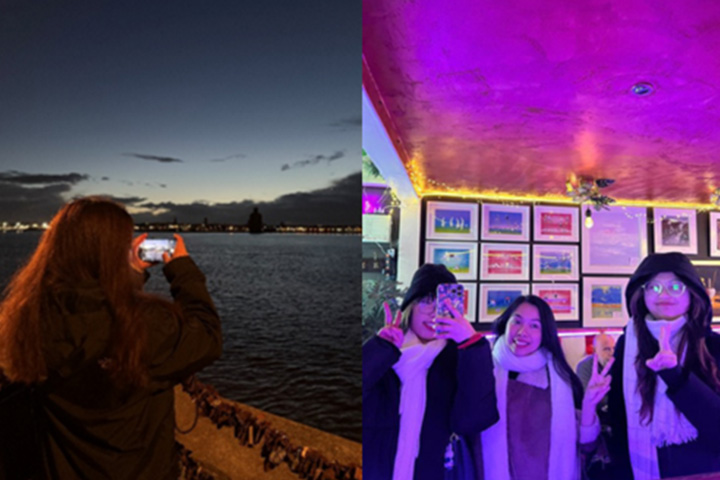
This February, we’re wishing a happy and prosperous New Year to all of our students who are celebrating! In this New Year blog special edition, we hear from Yanping, one of our XJTLU students, and Mai from Vietnam, on how they’ll be celebrating in Liverpool.
Yanping, studying Environment and Planning through our XTJLU 2+2 programme
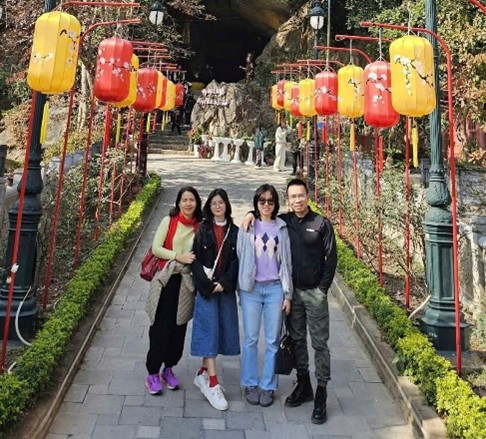
Hello everyone! My name is Yanping, and this February, I will be celebrating Chinese New Year away from home but also close to a place that has become home to me – Liverpool. I came to this city through the 2+2 programme from Xi’an Jiaotong-Liverpool University to study Environment and Planning, and this Spring Festival will be the first one I celebrate in the United Kingdom.
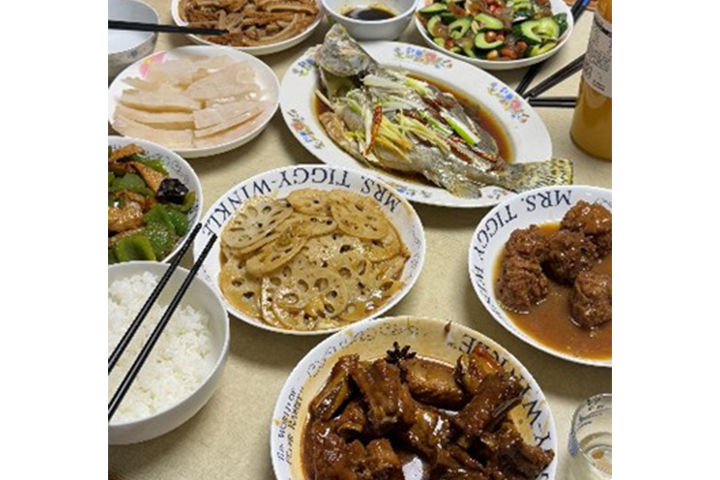
In China, Spring Festival is the most significant festival throughout the year. It not only celebrates the start of a new year, but also a new beginning for families. In the days leading up to New Year’s Eve, we clean our houses, hang red couplets on our doors, and paper cuttings to invite good luck. On New Year’s Eve, my family gathers around a large table filled with dishes ranging from dumplings to fish, which symbolizes prosperity. We dine, chat, and laugh, and keep the television on for the Spring Festival Gala, an evening-long variety show of music, comedy, and traditional performances that has become the norm for millions of families on New Year’s Eve.
Each lunar year is associated with one of the twelve zodiac animals. In 2026 we welcome the Year of the Horse, which in Chinese culture is linked with vitality, independence and the courage to forge ahead. As an overseas student who now feels genuinely at home in Liverpool, I find the horse an especially powerful symbol. It reminds me not to become complacent, but to keep embracing new opportunities with confidence, to push myself academically and personally, and to view every experience – from taking on more demanding coursework and joining wider communities on campus to thriving through the famously changeable British weather – as a chance to grow and move further forward.
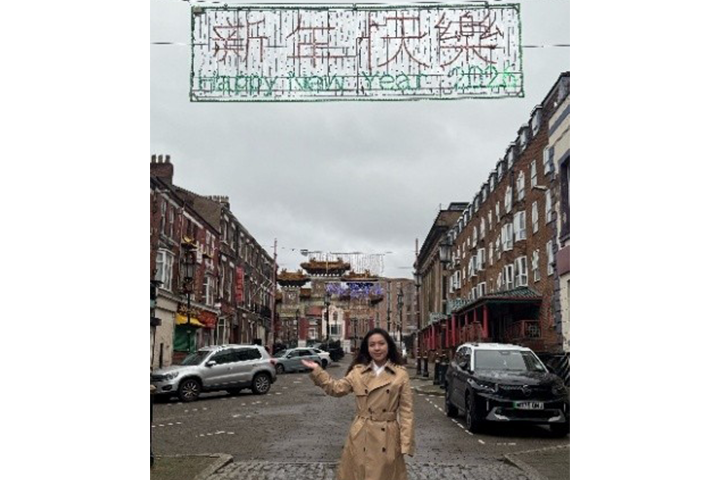
In previous years, I would always spend New Year’s Eve at home, helping my family prepare food and then staying up late to see in the new year together. This year, however, I will be celebrating with friends in Liverpool. We are planning to head to Chinatown, where the city’s Lunar New Year festivities will bring the streets to life with colour and sound. The main Year of the Horse parade will weave its way around Great George Square and the Chinese arch on Sunday 22 February, with dragon, lion and unicorn dances, food stalls, craft activities and live performances throughout the day. I am really looking forward to standing in the crowd, tasting familiar flavours and hearing a lively mixture of Scouse and Mandarin all around me.
2026 is also a particularly significant year for my studies. It marks the 20th anniversary of Xi’an Jiaotong-Liverpool University, the innovative partnership that made my 2+2 degree possible. As XJTLU celebrates two decades of collaboration between China and the United Kingdom, I am reminded that my own journey forms a small part of a much larger story of international education and cultural exchange.
As the Year of the Horse begins, my hope is to carry its spirit of determination and optimism into my academic life and beyond. For now, I am simply grateful to welcome the new year in a place where red lanterns and old brick warehouses stand side by side – and where a student like me can begin to feel at home in both worlds.
Mai from Hanoi, Vietnam, studying for a master’s in Strategic Communications
Hello everyone! My name is Mai, and I am a master’s student studying Strategic Communications at the University of Liverpool. I’m originally from Hanoi, Vietnam, and as the Lunar New Year approaches, I will share how this occasion is usually celebrated in my home country, and how it can be celebrated here at Liverpool!
The Lunar New Year marks the start of the new year according to the lunar calendar, and it is a widely celebrated occasion across many different cultures, including in Vietnam, where it is known as Tết Nguyên Đán, or simply Tết. In Vietnamese culture, it is the most important festive occasion of the year, symbolising pilgrimage, reunion, reflection, gratitude, and fresh starts. Therefore, we have numerous rituals and customs to celebrate the Tết Holiday.
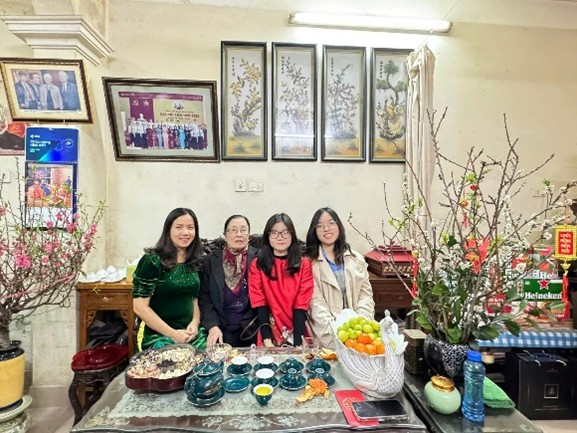
For me personally, the week before the Lunar New Year’s Eve, or Tất Niên, is the most exciting part of the Tết holiday. This is where everyone starts to wrap up the unfinished business of the past year and reset to celebrate a new season. A lot of shopping is done during this period: festive food and treats, new clothes, and especially house plants and fresh flowers, as it is a way for Vietnamese people to welcome spring and fresh beginnings into their homes. In the North, where I come from, wild branches of peach blossoms are the most popular flower choice, whereas in the South, people prefer apricot blossoms.
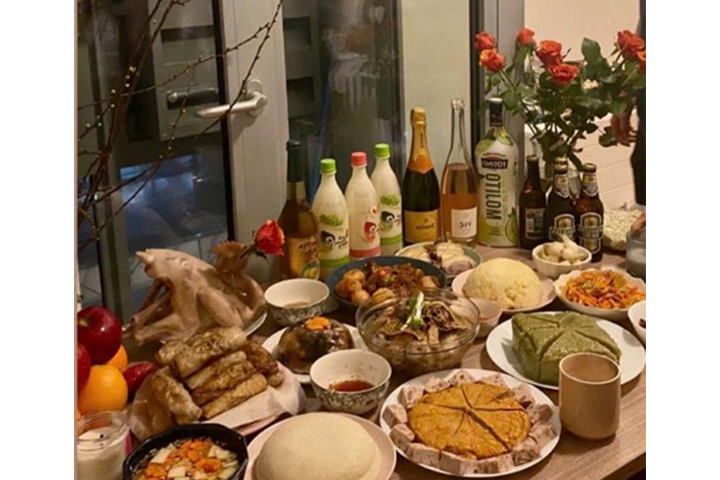
Then, on the Lunar New Year’s Eve, extended families will gather together for a dinner party with traditional festive dishes, much like the Christmas dinner here in the UK. This is where everyone can reunite with family members, look back on the past year, and reflect on their journey. Fireworks will be displayed at the cusp of the new year, and then everyone will exchange their new year’s wishes and blessings.
After that, on New Year’s Day, the most anticipated part of the Tết holiday begins: the lucky money! As a way to wish our loved ones good health and success for the new year, lucky money will be exchanged in red envelopes, a colour signifying good luck in Vietnamese culture. Although it is most common for children and the elderly to receive lucky money, anyone and everyone can be a recipient of luck! Another popular custom on Lunar New Year’s Day is to pay a visit to traditional temples and Buddhist pagodas. It is a way for Vietnamese people to get in touch with their spirituality and inner peace, as well as to wish for a happy and blessed new year.
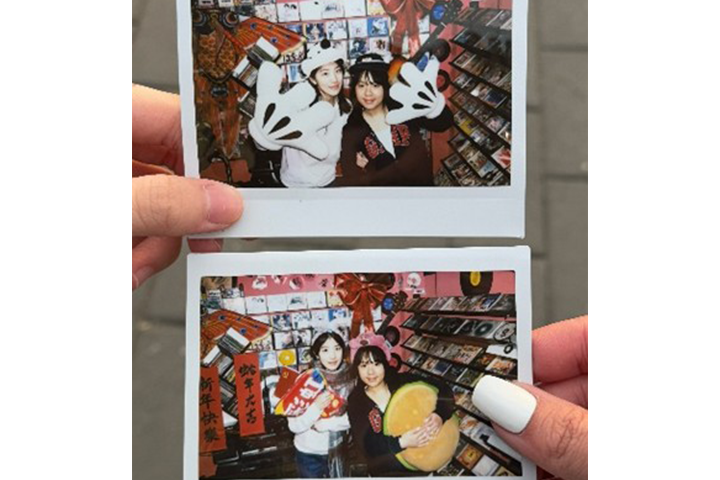
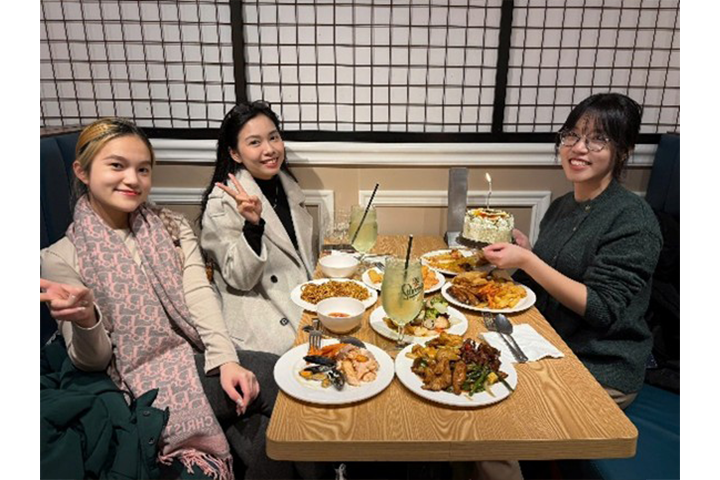
What I have listed so far are only the most important and common Lunar New Year customs in Vietnamese culture, and there are still many other rituals and activities for us to celebrate this occasion! However, whatever the custom might be, they all point to the same values that the Lunar New Year symbolises: gratitude, reunion, and hope. Therefore, to celebrate the Tết holiday far from home, in Liverpool, I will also put these values into practice! I will gather with my new friends at the University of Liverpool, who have become my found family, for a dinner party just like what I have in Vietnam. Together with them, I will look back on the past year with a lot of gratitude, and I will send them the best wishes as we look forward to the new year ahead. And of course, lucky money will definitely be exchanged!
Finally, I would like to wish everyone a Happy Lunar New Year, filled with good health, joy, and good fortune. Chúc Mừng Năm Mới!
Celebrations in Liverpool
Looking for some ideas to help you celebrate? There’s a range of events on across the city, including parades, live music and even a Lion Dance workshop. Find out more on Culture Liverpool’s website and National Museums Liverpool webpage.